1TB of physical RAM is fully achievable with current semiconductor technology, but it is almost never used in regular home personal computers. Mainstream consumer PCs are limited by the hardware specifications of their CPUs and motherboards, meaning they cannot natively support 1TB of RAM, and daily use cases never require that much capacity. For now, 1TB RAM setups are primarily deployed in enterprise servers and high-end professional workstations for specialized productivity work such as AI training and big data processing.
Why 1TB of RAM Can't Be Installed in a Regular Personal Computer
Whether a computer can support 1TB of physical RAM depends on three core hardware factors: the maximum capacity of a single RAM stick, the addressing capability of the CPU’s memory controller, and the number of RAM slots and supported specifications on the motherboard. For regular home PCs, all three of these hardware factors have strict upper limits, combined with intentional product segmentation from manufacturers, making 1TB of RAM practically impossible to implement on consumer platforms out of the box.
Reason #1: consumer processors have a clear upper limit on memory addressing. Currently, though mainstream Intel Core and AMD Ryzen desktop processors have boosted their official memory support to 192GB or even 256GB, it is still far below the 1TB requirement, and the vast majority of mid-range and low-end consumer CPUs remain capped at 128GB or lower. Even if you force larger RAM sticks into the system, the operating system will not be able to recognize or use the full capacity, which is a fundamental hardware limitation for consumer platforms.
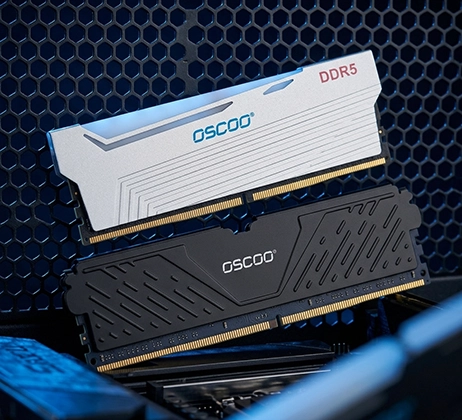
Reason #2: the number of RAM slots on consumer motherboards creates a hard ceiling on total capacity. Standard ATX and Micro-ATX home motherboards usually only have 4 RAM slots, and some compact Micro-ATX or Mini-ITX motherboards have only 2. With the recent availability of 128GB per DDR5 module, a 4‑slot board can theoretically support up to 512GB, and a 2‑slot Mini‑ITX board can now reach 256GB. However, stable operation at such densities is heavily dependent on motherboard trace layout, BIOS compatibility, and CPU memory controller quality – in practice, most consumer boards still struggle to reliably run 256GB or more, let alone 1TB. E-ATX workstation motherboards that support 8 or more RAM slots are too large for standard home PC cases, and cost several times more than regular consumer motherboards, putting them outside the category of standard consumer hardware.
Reason #3: high-capacity RAM sticks have very limited compatibility with consumer platforms. Most RAM sticks larger than 128GB per module are server-grade ECC (error-correcting code) memory, which uses different pin layouts and protocols that are not compatible with regular consumer motherboards. While there are a small number of 128GB consumer RAM sticks available, most home motherboard BIOS versions do not include support for them, so they rarely work reliably in practice and cannot be used as a standard upgrade option.
Reason #4: manufacturers intentionally create product tier segmentation. 1TB of RAM is a professional-grade specification, and the high-load workloads that require it carry higher commercial value. Chip and motherboard manufacturers deliberately restrict large memory support to their workstation and server product lines to create price differences between product tiers, and prevent the value of the high-end professional market from leaking into the consumer market. This product planning decision also blocks 1TB RAM from trickling down to regular personal computers.
Why Most Users Don’t Need 1TB of RAM
Beyond the hardware limitations that prevent installation, 1TB of RAM offers no practical value for the vast majority of personal users. It represents severe performance overkill, and comes with an extremely high cost. For regular users, daily memory needs are far below the terabyte level. There are clear recommended ranges for different use cases, and almost all common personal use scenarios are covered within 64GB of RAM.
| Use Case | Recommended RAM Capacity |
|---|---|
| Daily office work, web browsing, streaming media | 16GB |
| Mainstream AAA gaming, live streaming, light photo/video editing | 32GB |
| Heavy 4K video editing, large-scale 3D design, running multiple professional apps at once | 64GB |
From a cost perspective, investing in 1TB of RAM is extremely impractical for personal users. At today’s market prices, a single 64GB consumer DDR5 module typically costs well over $200, while an 128GB ECC server-grade module can exceed $1,000. To reach 1TB (e.g., using 8×128GB ECC), the RAM alone would cost $8,000 or more. When you add the required workstation motherboard, CPU, and cooling, a complete build starts at well over $10,000 – far beyond the budget of most personal computer buyers, and most of that performance would sit unused.
Common Use Cases for 1TB of RAM
1TB of RAM is not a marketing gimmick — it is a necessary specification for professional productivity workloads. Most of these use cases are in enterprise environments, and only a very small number of individual professional users have a genuine need for this much memory.
Enterprise Core Use Cases
In-memory databases and big data analytics platforms: Enterprise-grade in-memory databases such as Redis and Oracle store full business datasets in 1TB or more of physical RAM to deliver millisecond query speeds and transaction processing, supporting high-concurrency real-time services in industries like finance and telecommunications. Big data workloads such as log analysis and real-time risk control also rely on large memory capacities to boost computing efficiency.
AI model training and inference servers: AI training workflows require loading entire training datasets and model parameters into memory to reduce performance losses from constant hard drive reads and writes. A single AI training server typically comes with 1TB to multiple terabytes of RAM as standard. Local inference services running large language models also require 1TB or more of memory to hold full model parameters.
Enterprise virtualization and cloud servers: Bare-metal servers from cloud providers and internal enterprise virtualization clusters run dozens to hundreds of virtual machines or containers on a single physical server, with each instance allocated its own dedicated RAM. Total system memory easily exceeds 1TB to ensure stable parallel operation across all instances.
High-performance scientific and industrial simulation clusters: Research scenarios such as weather modeling, astrophysics calculations, fluid dynamics simulation, and molecular dynamics research generate massive amounts of intermediate computing data that must stay in memory throughout iterative calculations. 1TB+ of RAM is a standard configuration for these high-performance computing clusters.
Individual Professional User Use Cases
Ultra-high-definition video post-production and visual effects: Creators working with 8K/16K RAW footage for proxy-free editing, cinematic VFX compositing, or large-scale 3D scene rendering need to keep hundreds of gigabytes of footage and project files in memory at all times to avoid lag and long load times from constant hard drive access. 1TB of RAM significantly improves workflow efficiency for these tasks.
Local large language model deployment and AI creation: Individual professionals who run unquantized large language models with 70B+ parameters locally, or perform AI model fine-tuning and local multimodal inference, need 800GB to 1.2TB of physical RAM to hold the full model and runtime data, making 1TB the minimum entry-level capacity for this use case.
Large-scale industrial design and engineering simulation: Individual designers and researchers working on extremely large CAD engineering drawings, finite element analysis, or structural mechanics simulation work with enormous project datasets. Insufficient memory will cause software crashes and prevent projects from running entirely, making 1TB of RAM a necessary requirement for these heavy engineering computing tasks.
1TB of RAM is not some far-off futuristic technology. It is a standard hardware specification built for professional productivity workloads, and it has almost no relevance to regular home personal computers. For the vast majority of personal users, there is no need to fixate on whether you can install 1TB of RAM. Just choose a capacity that matches your actual use cases.