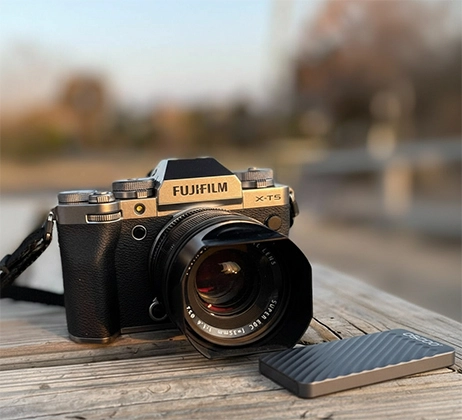
When your phone repeatedly prompts that storage space is insufficient, or when you want to carry high-definition videos and photos taken with your camera or drone, a small accessory can often solve a big problem. This storage device, only about the size of a fingernail, is the TF card. Though seemingly insignificant, it quietly supports the expansion and continuation of our digital lives. From smart devices to various digital products, the TF card undertakes the heavy responsibility of storing massive amounts of data with its tiny form factor, becoming an indispensable portable storage solution.

What is a TF Card?
The TF card’s original formal name was TransFlash card, introduced by the storage giant SanDisk in 2004. It was designed to meet the urgent demand for small, expandable storage media in mobile phones at the time and quickly gained market attention due to its extremely small size. In terms of naming, the TF card underwent an important evolution. One year after its launch, the SD Association adopted this micro storage standard and formally named it Micro Secure Digital Card, abbreviated as Micro SD card. Therefore, TF card can be considered its former name, while MicroSD card is its standard formal name. To this day, these two names refer to the same product and can be regarded as equivalent in the market.
In terms of appearance, a standard TF card measures about 15mm x 11mm, roughly the size of an adult’s fingernail. This compact design allows it to be easily embedded into various small devices. One end of the card has a row of fine metal contact pins, which serve as the bridge for data and power transmission with the reading device. Typically, a TF card is about 1mm thick and weighs less than 0.5 grams, truly achieving massive data storage in a tiny space.

How TF Cards Work
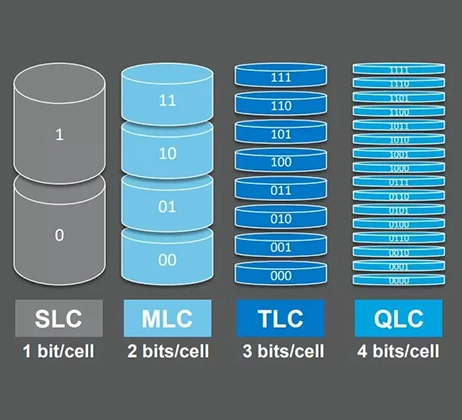
The core of a TF card is flash memory technology, a type of non-volatile memory. Non-volatile means that data stored within it is not lost even after power is turned off. Its basic storage unit is the floating-gate transistor. Each transistor can store a certain amount of electrical charge; the presence or absence (or amount) of charge represents the binary data 0 and 1. When data needs to be written, the controller inside the TF card applies a high voltage to specific storage units, injecting electrons into the floating gate—a process called programming. When data needs to be read, the controller detects whether there is charge and how much in each storage unit, thus determining the stored data value. Erasing data involves applying a reverse voltage to remove electrons from the floating gate, restoring the storage unit to its initial state.

You can think of the TF card’s interior as having countless tiny “gates” that can be precisely controlled on and off, recording information by controlling the state of these gates. All these operations are managed and executed by a micro-controller integrated onto the TF card. The controller is responsible for communicating with the device, performing wear leveling to extend lifespan, and error correction, ensuring the accuracy and reliability of data read/write operations.
The Difference and Connection Between TF Cards and SD Cards
TF cards and SD cards belong to the same family of technical standards. Their core connection lies in compatibility, while the main differences lie in physical size and the resulting differences in application scenarios.
| TF Card | SD Card | |
|---|---|---|
| Official Name | Micro Secure Digital Card | Secure Digital Card |
| Physical Size | Approx. 15mm x 11mm x 1mm, very compact | Standard size approx. 24mm x 32mm x 2.1mm, significantly larger |
| Primary Use | Space-constrained miniaturized devices like mobile phones, action cameras, drones, dash cams | Relatively larger devices like DSLR/mirrorless cameras, camcorders, portable game consoles |
| Origin & Relationship | A micro-version evolved from the SD card standard, considered a “descendant” of the SD card | The original standard upon which the TF card specification is based |
| Connectivity | Can be converted into an SD card using an adapter for use in SD card slots | Cannot be converted into a smaller TF card form factor |
Key Performance Indicators of TF Cards
When purchasing a TF card, various symbols and numbers are printed on the packaging and card surface. Understanding these key performance indicators is essential for making the right choice. These indicators mainly revolve around three aspects: capacity, speed, and specialized performance.
First, capacity directly determines how much data you can store, with units ranging from GB to TB. When choosing capacity, consider not only your needs but also the maximum capacity limit supported by your device.
- Class Speed: Such as C10, indicating a minimum write speed of 10MB/s.
- UHS Speed Class: Such as U1 and U3, guaranteeing 10MB/s and 30MB/s respectively.
- Video Speed Class: Such as V30, V60, designed specifically for high-resolution video; the number represents the minimum write speed. Typically, high-resolution video recording requires U3 or V30 and above.
Furthermore, to meet the demand for running applications directly from the storage card, Application Performance Class A1 and A2 have emerged. This primarily measures random read/write performance, which is very important for phone app expansion or game console storage. The A2 standard provides faster application loading and running experience.
Advantages and Disadvantages of TF Cards
- Small size, strong portability: Their extremely small size and weight make them ideal storage solutions for space-constrained devices like mobile phones, action cameras, and drones.
- High versatility, good compatibility: They can be easily converted into standard SD cards using a simple adapter, allowing data reading on most devices with SD card slots, expanding their application range.
- Plug-and-play, easy operation: They usually don’t require driver installation; once recognized by the device, data transfer and storage can begin directly, resulting in a low barrier to use.
- High cost-effectiveness: Compared to the same capacity of built-in phone storage or other professional storage media, TF cards provide considerable storage expansion at a lower price.
- Bottlenecks in absolute performance: Their read/write speeds, especially sustained write speeds, are generally lower than built-in solid-state storage or professional card types like CFexpress. They can become a bottleneck when handling high-bitrate video or continuous burst shooting.
- Low physical presence, easy to lose or damage: Due to their very small size, they are easily lost during daily insertion/removal and carrying. Simultaneously, their physical structure is relatively fragile, susceptible to breaking by force or electrostatic discharge.
- Data security and durability challenges: The flash memory chips in TF cards have a limited write endurance. Furthermore, as removable storage media, accidental removal or improper operation can lead to data corruption. Compared to built-in storage, the risk of data loss is relatively higher.
- Variable performance levels: Products from different brands and grades vary greatly in speed on the market. Consumers who lack understanding may easily purchase products that cannot meet their device’s requirements.
Application Scenarios of TF Cards
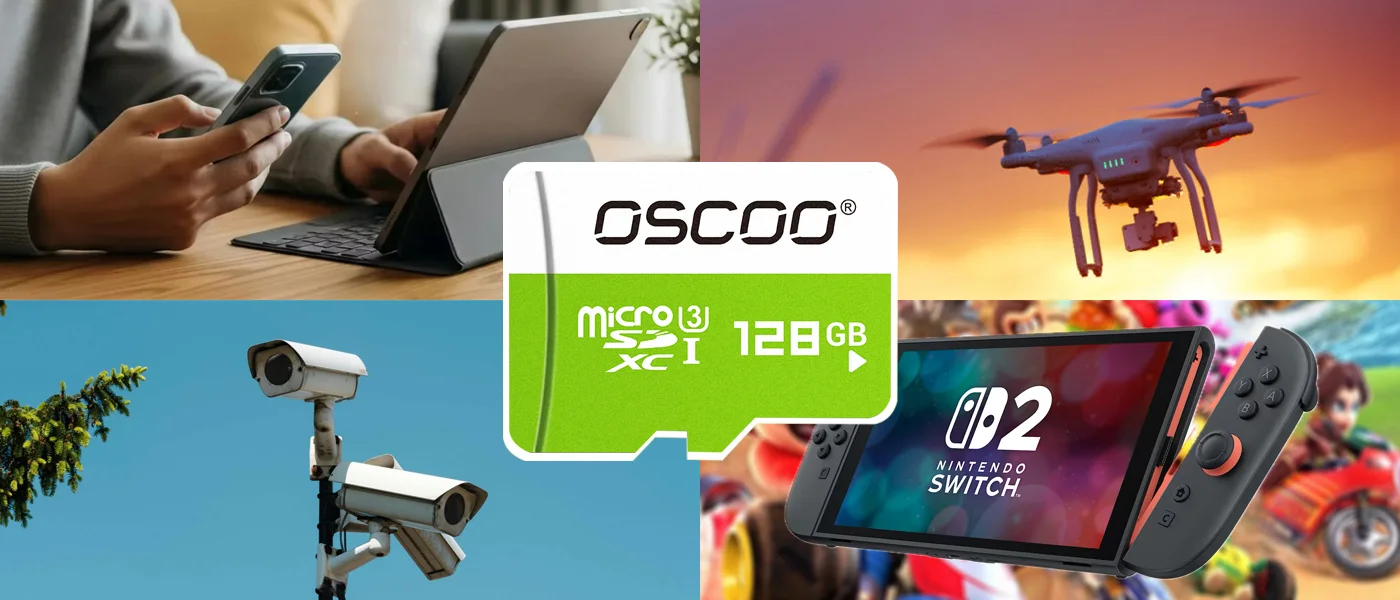
- Smartphone and Tablet Storage Expansion: For users with limited device storage or devices that don’t support expanding internal storage, inserting a TF card is the most cost-effective expansion solution. It can store photos, videos, music, documents, and other large files, effectively alleviating system storage pressure.
- Digital Cameras and Drones: These devices are primary application areas for TF cards. High-pixel photos and high-resolution video recording generate huge files, requiring large-capacity, high-speed TF cards. Choosing a card that meets the device’s requirements, such as U3 or V30 and above, is crucial to ensure smooth continuous shooting and 4K video recording.
- Dash Cams and Security Monitoring Devices: These devices require TF cards for 7×24 continuous cyclic writing. Therefore, besides sufficient capacity, the card’s durability, reliability, and ability to withstand extreme temperature changes are more important than top speed. TF cards specifically designed for surveillance are a better choice.
- Portable Game Consoles like Nintendo Switch: TF cards can directly expand the game console’s storage space for downloading and installing more digital games. Choosing an A1 or A2 Application Performance Class card can significantly improve game loading speed and running experience.
- Other Portable Devices: TF cards are also widely used in other devices, such as portable music players, action cameras, some drone remote controllers, and as storage modules for some small IoT devices.
How to Choose a Suitable TF Card
Choosing a suitable TF card isn’t just about seeking the largest capacity or highest speed; the key is to perfectly match it with your device’s needs.
Identify which device you will use the TF card for is the first step in selection. Different devices have different emphasis on storage card requirements. For example, when used in a dash cam or home security camera, the device’s characteristic of continuous cyclic writing demands extremely high durability and reliability from the TF card, while top read/write speed is not the primary consideration. Conversely, if you use it for a digital camera or drone that supports 4K video recording, then a high-speed card with a write speed meeting the U3 or V30 standard is essential to avoid stuttering or interruption during recording. For game consoles like the Nintendo Switch or for expanding phone app storage, you should prioritize products with the A2 Application Performance Class to ensure applications and games load quickly and run smoothly.
Correctly interpret the speed symbols on the card surface. As mentioned earlier, C10 or U1 ratings are sufficient for full HD video playback and daily file storage. However, recording 4K video requires at least a U3 or V30 class card. If your device supports higher video formats, then V60 or V90 ratings provide more ample performance headroom. Note that some manufacturers highlight read speed, but for shooting, sustained write speed is more critical. Therefore, focus on the ratings with U or V symbols.
Choose a reliable brand and paying attention to the warranty policy. Products from well-known brands generally offer more guarantees in terms of quality, stability, and after-sales service, effectively reducing the risk of precious data loss due to card failure. Most brands offer limited warranties ranging from one year to lifetime, which can also serve as a reference for gauging product confidence. In summary, the ideal TF card is not the one with the strongest specifications on paper, but the one that works stably and efficiently in your device.
TF Card Usage and Maintenance Tips
- Format when first used: It is recommended to format a new card within the target device when first used, or after switching between different devices. This ensures the card uses the file system most compatible with the device, avoiding potential compatibility issues.
- Always safely eject: Before removing the TF card from a computer or device, always perform the “Safely Remove Hardware” or “Eject” operation in the operating system or device settings. This informs the system to complete all pending data write tasks, thereby preventing data corruption or loss. Never pull the card out directly during data transfer or read/write operations.
- Pay attention to physical storage conditions: TF cards should be stored in a dry, cool place, away from static electricity, strong magnetic fields, and high-temperature environments. It’s best to keep them in a dedicated storage case to avoid scratches, stains, or moisture oxidation on the metal contacts, and also to prevent physical bending.
- Master common troubleshooting steps: When the TF card exhibits issues like being unrecognized, slow read/write speed, or file corruption, try the following steps:
- First, reinsert the card or try a different card reader for testing.
- Second, try reading it on a different device to rule out a single device interface failure.
- Finally, if the card is recognized but data is abnormal, you can try using professional data recovery software to salvage data, but do not write new files to the card.
Despite the challenges posed by the continuous increase in built-in smartphone storage capacity and the growing popularity of cloud storage services, TF cards will retain an irreplaceable market position in the foreseeable future thanks to their unique physical portability and plug-and-play convenience.
Looking ahead, the development of TF cards will mainly evolve along two directions. On one hand, in high-end application scenarios, as demand-intensive uses such as 8K video recording and high-speed continuous shooting become more common, TF cards will continue to pursue higher read and write speeds, larger per-card capacities, and stronger reliability to meet the needs of professional-level content creation. On the other hand, in the vast field of the Internet of Things, TF cards will keep playing an important role as local storage modules in devices such as smart home systems, security surveillance, and in-vehicle systems, where higher requirements for data durability and stability are essential.
Therefore, the future of TF cards is not one of decline, but of more refined market segmentation. They may no longer be standard equipment for all devices, but in professional and specialized scenarios that require flexible, low-cost, and large-capacity portable storage, TF cards will continue to play a key role. For consumers, understanding how to choose and use TF cards correctly remains a practical and valuable skill.