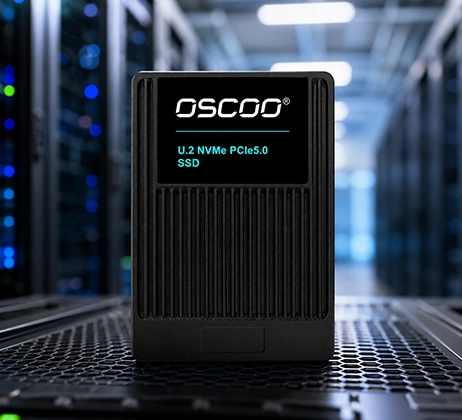
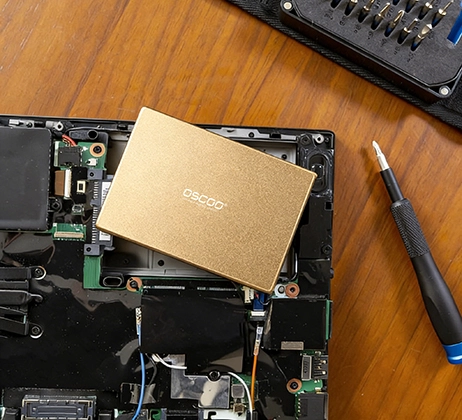
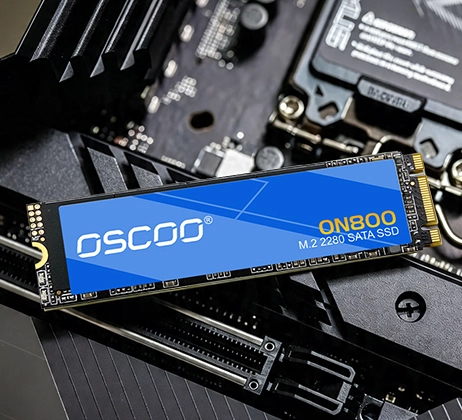
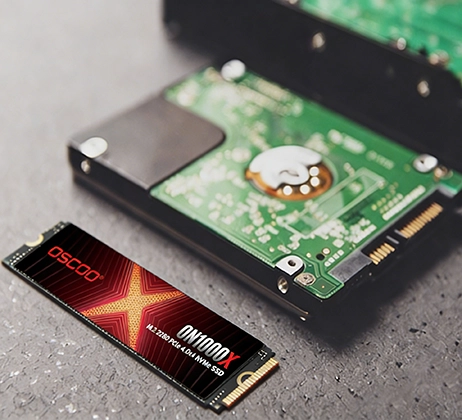
Data centers mainly use three types of enterprise solid-state drives: NVMe SSDs, SATA SSDs, and SAS SSDs. With high bandwidth, low latency, and strong parallel processing capabilities, NVMe SSDs are widely used in AI computing, cloud computing, and enterprise databases. SATA SSDs are suitable for storage scenarios where cost and compatibility are key considerations. SAS SSDs are mainly used in traditional enterprise storage systems. However, because different workloads have different requirements for performance, capacity, endurance, and cost, data centers typically use multiple types of SSDs to build a tiered storage architecture rather than relying on just one type of drive.
What Is a Data Center SSD?
A data center SSD is a solid-state drive designed specifically for servers, enterprise storage systems, cloud computing platforms, and large data centers. Compared with consumer SSDs, data center SSDs place greater emphasis on long-term stable operation, sustained read and write performance, data integrity, and service life. These features help meet the strict storage requirements of enterprise applications. Data center SSDs typically have the following characteristics:
- High reliability: They support error checking, data integrity protection, and health monitoring to reduce business risks caused by device failures.
- High endurance: They can handle large amounts of sustained writing, making them suitable for databases, virtualization, and enterprise applications.
- Consistent performance: They are designed to maintain stable read and write performance under sustained workloads and heavy concurrent access.
- Low latency: They respond quickly to server storage requests, improving the responsiveness of databases and cloud services.
- Power-loss protection: Some enterprise SSDs include power-loss protection (PLP) to reduce the risk of data corruption caused by an unexpected power outage.
- Enterprise management: They support drive health monitoring, error reporting, lifespan assessment, and remote maintenance and management.
Main Types of Data Center SSDs
Based on their interfaces and communication protocols, the SSDs commonly used in data centers fall into three main types: NVMe SSDs, SATA SSDs, and SAS SSDs. Each has its own strengths in performance, compatibility, cost, and use cases.
NVMe SSDs
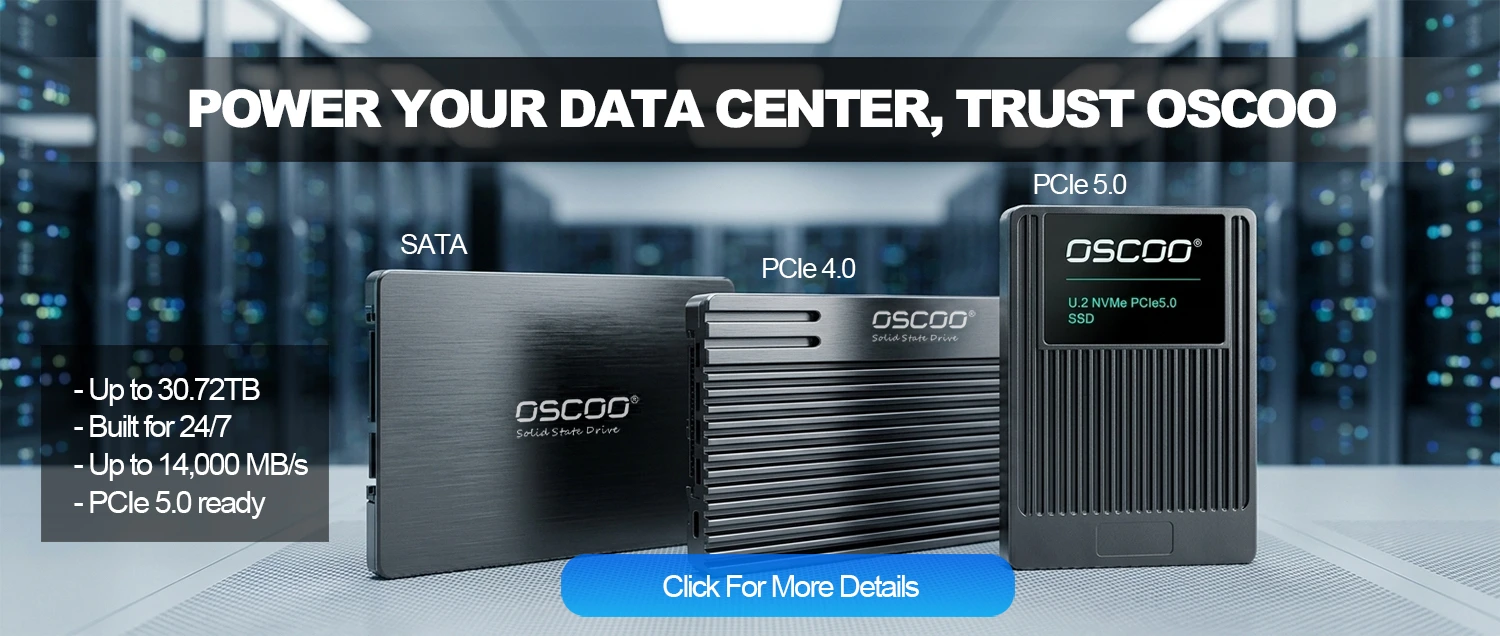
NVMe (Non-Volatile Memory Express) SSDs are important high-performance storage devices in modern data centers. NVMe is a communication protocol designed specifically for non-volatile storage devices. NVMe SSDs usually connect to servers through a PCIe interface. Compared with the traditional SATA protocol, NVMe supports more concurrent I/O queues and a more efficient command-processing mechanism. This reduces communication overhead and improves storage performance. NVMe SSDs are also classified by PCIe generation. PCIe 4.0 is currently the most widely deployed version, PCIe 5.0 is being adopted on a large scale, and PCIe 6.0 is an emerging option for HPC and very large AI clusters. The main advantages of NVMe SSDs include high transfer bandwidth, low access latency, high IOPS, good scalability, and suitability for high-performance applications.
SATA SSDs
SATA (Serial ATA) SSDs are a well-established type of storage in data centers. Although their performance is generally lower than that of modern NVMe SSDs, their broad compatibility and simple deployment still make them suitable for some enterprise servers and storage systems. SATA SSDs typically use the SATA 3.0 interface, which has a theoretical transfer rate of 6 Gb/s. Their actual sequential read and write speeds are usually below 600 MB/s. The main advantages of SATA SSDs include:
- Compatibility with a wide range of existing server platforms.
- Faster data access than hard disk drives (HDDs).
- Suitability for read-intensive applications and workloads that do not require high performance.
- The ability to serve as server operating system drives and boot drives.
- A relatively cost-effective storage upgrade option for traditional servers.
SAS SSDs
SAS (Serial Attached SCSI) SSDs are enterprise solid-state drives that use the SAS interface and SCSI protocol. They are mainly used in traditional enterprise storage systems and server storage arrays. SAS technology has been used in enterprise storage for many years. Its advantages go beyond data transfer capabilities and include integration with enterprise storage systems, dual-port connectivity, and mature management mechanisms. The main characteristics of SAS SSDs include enterprise-grade connectivity, dual-port support, system compatibility, and reliable integration into enterprise environments.
What SSDs Do Different Types of Data Centers Use?
Data centers have different business needs and workloads, so their SSD choices also vary. Enterprises typically select storage solutions based on data access frequency, read/write ratio, storage capacity, latency requirements, and budget.
Cloud Computing Data Centers
Cloud computing data centers provide services such as virtual machines, cloud databases, cloud disks, file storage, and object storage to large numbers of users. Because different cloud services have different storage performance requirements, cloud data centers typically combine NVMe SSDs, SATA SSDs, and high-capacity QLC SSDs. NVMe SSDs are mainly used for high-performance virtual machines, databases, and latency-sensitive applications. QLC SSDs are suitable for storage workloads that require large capacities and are accessed frequently for reading. SATA SSDs can be used in traditional servers and applications with relatively modest performance requirements. Common SSD configurations in cloud computing data centers include:
- PCIe 4.0 and PCIe 5.0 NVMe SSDs for high-performance cloud services.
- TLC NVMe SSDs for general cloud computing and mixed read/write workloads.
- QLC NVMe SSDs for high-capacity, read-intensive storage.
- Enterprise SATA SSDs for traditional servers and systems with higher compatibility requirements.
AI Data Centers
AI data centers have high storage performance requirements because GPUs and other computing accelerators need a continuous supply of training data and model files. During AI model training, the storage system must read large amounts of training data quickly. It must also handle model checkpoints, intermediate training results, and other large files. For this reason, enterprise NVMe SSDs are important storage devices in modern AI data centers. Common choices include PCIe 5.0 NVMe SSDs, the emerging PCIe 6.0 NVMe SSDs, and high-capacity QLC NVMe SSDs.
Financial Data Centers
Financial data centers typically run core banking systems, online trading platforms, financial databases, real-time risk control systems, and financial data analytics platforms. These applications have strict requirements for response times, data reliability, and system availability. Enterprise TLC NVMe SSDs are generally suitable for high-performance storage workloads in financial data centers, especially database applications that require extensive random reads and writes and low latency. For financial workloads, average SSD read and write speeds are not enough. P99 and P99.9 latency also need to be considered. These metrics help enterprises understand whether a small number of slower I/O requests under heavy workloads could affect overall business responsiveness.
Enterprise Database Data Centers
Enterprise databases commonly include systems such as Oracle Database, Microsoft SQL Server, PostgreSQL, and MySQL. These databases handle a range of operations, including random reads, random writes, transaction logs, and sequential data access. As a result, they have certain requirements for both SSD performance and endurance. Common SSD choices include enterprise TLC NVMe SSDs, mixed-workload NVMe SSDs, and high-endurance enterprise SSDs.
CDN and Large-Scale Storage Data Centers
Content delivery networks (CDNs) and large-scale storage data centers need to store large amounts of images, videos, documents, software files, and other digital content. These workloads typically require a balance between storage capacity, read speed, and cost per terabyte. High-capacity QLC NVMe SSDs are well suited to read-intensive storage scenarios. Depending on the system architecture and performance requirements, TLC NVMe SSDs or enterprise SATA SSDs can also be used.
NVMe SSDs are the main storage choice in modern data centers, while SATA and SAS SSDs are used more often to support existing infrastructure and specific scenarios that require high reliability. Choosing SSDs for a data center is not simply a matter of selecting the fastest drives. Instead, data centers build tiered storage architectures. High-value workloads with heavy read and write demands are placed on high-performance NVMe tiers, while read-intensive workloads and cold data are stored in lower-cost, high-capacity tiers. The goal is to strike a balance between performance, reliability, and cost.