In 2026, 32GB DDR5 is not overkill for the majority of PC users. It has evolved from a “luxury” to a “mainstream necessity” for anyone who values smooth performance, multitasking capability, and future-proofing. While 16GB remains viable for basic tasks and budget builds, 32GB provides the ideal balance of cost, performance, and longevity for most gamers and creators.
Why 32GB Is Becoming the New Recommendation
Three major changes have driven memory requirements upward over the last two years.
Modern AAA games routinely use more than 20GB of RAM. Titles built on Unreal Engine 5 can consume 18–22GB while running. If you also keep a browser, voice chat, or streaming software open, total usage easily exceeds 25GB. A 16GB system will hit a hard limit here, causing stuttering or forced background app closures.
Background software keeps demanding more memory. A browser with a dozen tabs can eat 3–5GB. Add messaging apps, security tools, cloud sync utilities, and other resident programs – everyday idle usage often surpasses 8GB. That leaves little headroom for games or professional applications.
Users are already voting with their wallets. Steam’s hardware survey data from 2025 shows that in just six months, the share of gamers using 16GB dropped from 43.12% to 41.88%, while those using 32GB rose from 32.85% to 35.42%. The shift toward 32GB is clear and ongoing.

Who Should Go Straight to 32GB
Serious gamers. If you regularly play recent AAA titles or competitive online games, 32GB lets you run high settings while also streaming, recording, or keeping a browser open for guides.
Content creators. Video editing (especially 4K), 3D modeling, and motion graphics all benefit significantly. In Premiere Pro or DaVinci Resolve, 32GB gives smoother timeline scrubbing and cuts render times by 30–50% compared to 16GB.
Developers and data professionals. Running Docker containers, local VMs, or small AI models (e.g., 7B parameter LLMs) is much more comfortable with 32GB. You can spin up multiple services without hitting memory walls.
Users who don’t want to upgrade for 3–4 years. Buying 32GB now costs less than buying 16GB today and having to replace it sooner.
Where 16GB Still Works
16GB hasn’t become useless. It remains adequate for:
Office work. Word, Excel, email, and video calls usually stay under 10GB.
Light entertainment. Streaming video, music, and older or less demanding games.
Tight budgets. If money is very limited and you’re willing to close everything else while gaming, 16GB can deliver a playable experience.
Real-world Performance Comparison
| Usage Scenario | 16GB Experience | 32GB Experience |
|---|---|---|
| Office work + many browser tabs | Fine up to ~30 tabs, then slows down | Effortlessly smooth |
| New AAA games (2025–2026) | Medium settings, must close background apps, occasional stutters | High settings + streaming + voice chat, stable |
| 4K video editing | Laggy preview, longer exports | Smooth timeline, exports significantly faster |
| Local AI model (7B parameters) | Won’t run or painfully slow | Runs inference smoothly |
| Multiple VMs / Docker containers | Memory exhausted quickly, system sluggish | Comfortably runs 3–4 lightweight instances |
Buying Advice for 32GB DDR5
A major factor we can’t ignore is the sharp rise in DDR5 prices. In early 2025, a decent 32GB DDR5-6000 kit cost around US$ 85~120. But in 2026, the same kit jumped to US$ 250~400, a three‑fold increase. The main cause is AI demand sucking up HBM production capacity, which has spilled over into the general DDR5 market. So, how should you decide?
If you must build a PC now and have the budget, 32GB is still the more future‑proof choice.
If your usage is very light and you’re on a tight budget, you can temporarily go with 16GB and wait for prices to (hopefully) drop.
If you already have a decent 16GB DDR4 system, don’t feel forced to upgrade to an expensive DDR5 platform just yet. Wait for a better moment.
Other Technical Tips
Always buy a dual‑channel kit. Get two 16GB sticks instead of one 32GB stick because dual‑channel mode almost doubles memory bandwidth, which benefits both games and productivity apps.
Pay attention to speed and timings. For AMD AM5 platforms, DDR5-6000 CL30 is widely considered the sweet spot – great balance of performance and stability. Intel platforms can go higher, but real‑world gains are small. Prioritize capacity over chasing extreme frequencies.
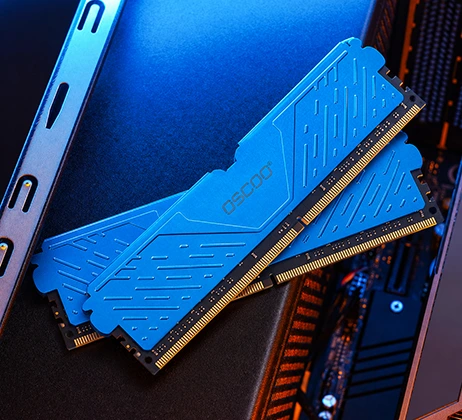
Check physical compatibility. Some RAM modules have tall heat spreaders that can block large air CPU coolers. Also, consult your motherboard’s QVL (qualified vendors list) to avoid compatibility headaches.
In 2026, 16GB of RAM is still enough for everyday office work, light entertainment, and older games. But operating systems are growing, websites are becoming heavier, and new AAA games now routinely list 32GB as the recommended configuration and 16GB is rapidly approaching the end of its useful life. If you are planning to upgrade or buy a new computer and want it to serve you well for the next three to four years, 32GB DDR5 is the safer and more forward‑looking choice.