In modernen elektronischen Geräten werden Flash-Speicher wie z. B. SSDs, USB-Flash-Laufwerke und SD-Karten haben sich als gängige Speichermedien durchgesetzt. Die Lebensdauer und Zuverlässigkeit dieser Geräte hängt von einer grundlegenden Technologie ab - dem Verschleißausgleich. Dabei handelt es sich um eine Low-Level-Verwaltungstechnologie, die auf NAND-Flash-Speichergeräte angewendet wird. Ihr Hauptzweck besteht darin, Lösch-/Schreibvorgänge (P/E) gleichmäßig auf alle Speichereinheiten (Flash-Blöcke) des Geräts zu verteilen und so zu verhindern, dass einige Speichereinheiten durch häufiges Löschen und Schreiben vorzeitig abgenutzt werden, wodurch die Gesamtlebensdauer des Geräts maximiert wird. Lebenserwartung des Speichergeräts. Der Verschleißausgleich wird vom Controller-Chip des Speichergeräts durchgeführt, und der Benutzer kann nicht direkt eingreifen oder ihn manuell konfigurieren. Diese Technologie ist eine der Kernfunktionen des Flash Translation Layer und die grundlegende Garantie für den zuverlässigen Betrieb aller modernen Flash-Speichergeräte.

Die Notwendigkeit des Verschleißausgleichs
NAND-Flash-Speicher hat eine kritische physikalische Einschränkung: Jeder Speicherblock hat eine begrenzte Anzahl von Lösch-/Schreibzyklen. Sobald die Nennzahl der Zyklen erreicht ist, treten in der Speichereinheit Probleme wie Schäden an der Oxidschicht und Ladungsverluste auf, die ein normales Schreiben und Lesen von Daten verhindern und schließlich zum vollständigen Ausfall führen. Die verschiedenen Typen von NAND-Flash-Speichern haben sehr unterschiedliche Lösch-/Schreiblebensdauern. SLC (Single-Level Cell) hat etwa 50.000 bis 100.000 Zyklen, MLC (Multi-Level Cell) hat etwa 3.000-10.000 Zyklen, TLC (Triple-Level Cell) hat etwa 1.000-3.000 Zyklen und QLC (Quad-Level Cell) hat nur 200-1.000 Zyklen. Da sich die NAND-Technologie in Richtung höherer Dichte bewegt, hat sich QLC auf dem Verbrauchermarkt allmählich durchgesetzt, und aufgrund der geringeren Anzahl von P/E-Zyklen wird die Verschleißausgleichstechnologie noch wichtiger.
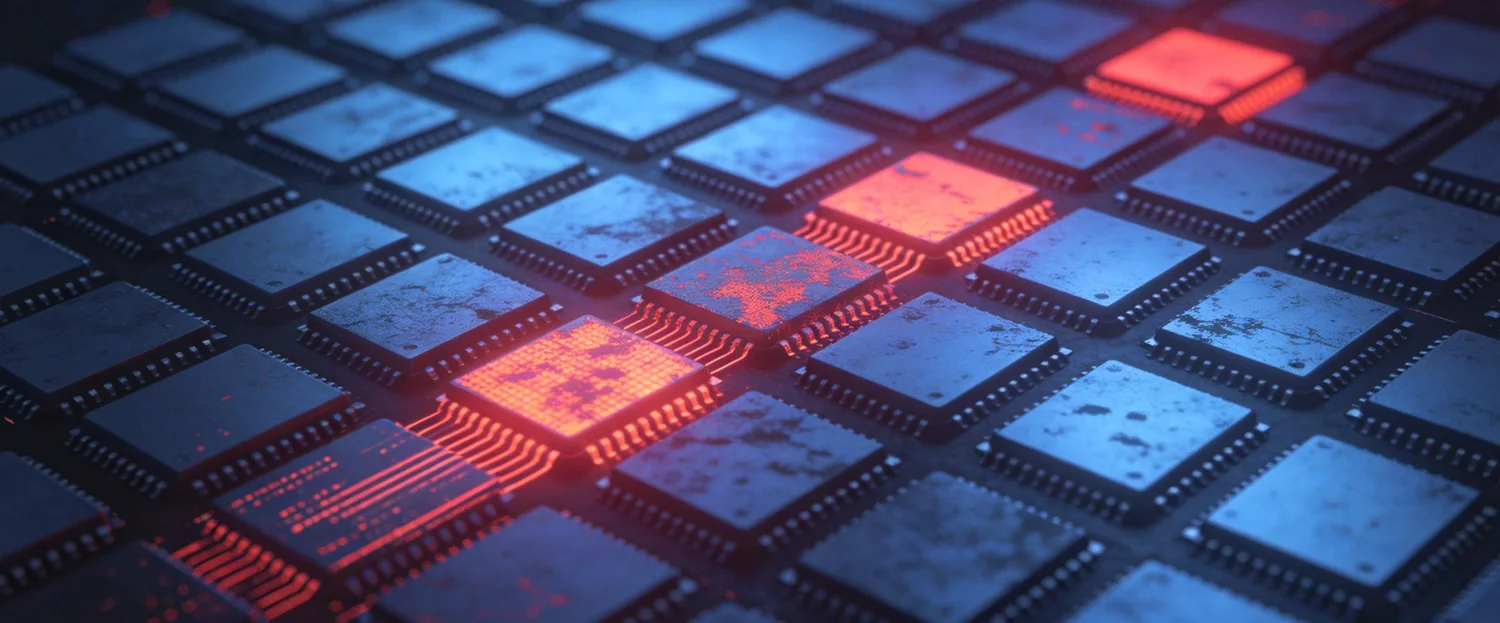
Ohne Verschleißausgleich neigen Betriebssysteme dazu, wiederholt dieselben logischen Adressen zu lesen und zu beschreiben. So führen beispielsweise heiße Daten wie die Protokollbereiche des Dateisystems und häufig aktualisierte Systemdateien dazu, dass die entsprechenden physischen Blöcke häufig gelöscht und geschrieben werden. Blöcke, in denen statische Daten wie Fotos, Dokumente und Systemdateien gespeichert sind, werden dagegen selten gelöscht oder beschrieben. Dieses ungleichmäßige Abnutzungsmuster führt dazu, dass die Lebensdauer einiger heißer Blöcke schnell erschöpft ist und das gesamte Speichergerät vorzeitig ausfällt.

Grundprinzip des Verschleißausgleichs
Die Kernlogik des Wear Leveling besteht in der “dynamischen Zuweisung von Schreibadressen” und wird vom Controller des Speichergeräts gesteuert. Die Flash-Übersetzungsschicht (Flash Translation Layer, FTL) verwaltet eine Zuordnungstabelle von logischen Adressen zu physikalischen Adressen. Die Controller verfolgt die Anzahl der Löschvorgänge jedes Flash-Blocks in Echtzeit, erstellt einen “Wear Record” für jeden Block und zeichnet die verwendeten P/E-Zyklen genau auf. Wenn neue Daten geschrieben werden müssen, überschreibt der Controller nicht direkt die ursprüngliche physikalische Adresse. Stattdessen wählt er zunächst den Flash-Block mit den wenigsten Löschvorgängen und dem niedrigsten Abnutzungsgrad im “Wear Record” als Schreibziel aus. Anschließend wird die Mapping-Tabelle in der FTL aktualisiert, wobei die ursprüngliche logische Adresse auf diese neue physikalische Adresse verweist. Gleichzeitig werden die Daten im ursprünglichen physischen Block als ungültig markiert und warten auf die nachfolgende Garbage Collection, um sie zu bereinigen. Durch diese dynamische Zuweisungsstrategie wird die Schreiblast gleichmäßig auf alle Blöcke verteilt, wodurch eine lokale Überbeanspruchung vermieden wird.
Hauptalgorithmusarten der Verschleißnivellierung
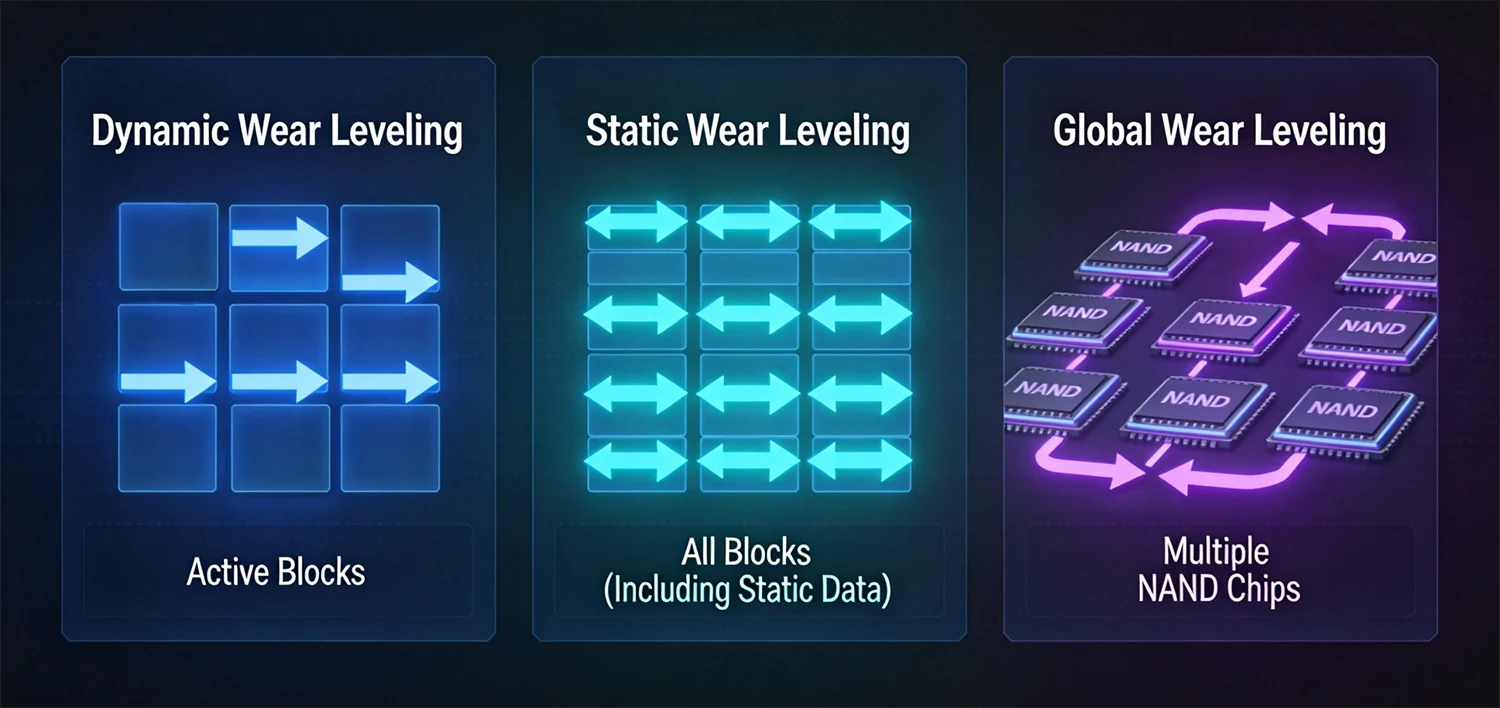
Je nach Auswuchtungsumfang und Implementierungslogik wird der Verschleißausgleich hauptsächlich in drei Algorithmustypen unterteilt: dynamisches Verschleißausgleichsverfahren, statisches Verschleißausgleichsverfahren und globales Verschleißausgleichsverfahren. Die verschiedenen Algorithmen unterscheiden sich erheblich in Bezug auf die anwendbaren Szenarien, die Leistung und die Wirksamkeit des Ausgleichs.
Dynamisches Verschleißausgleichsverfahren
Der dynamische Verschleißausgleich ist der grundlegendste und am weitesten verbreitete Algorithmus. Sein Hauptmerkmal ist, dass er sich “nur um dynamische Daten kümmert”. Im täglichen Gebrauch werden dynamische Daten (wie temporäre Systemdateien, Browser-Cache, Echtzeitprotokolle usw.) sehr häufig aktualisiert. Ohne Ausgleich würden die entsprechenden Flash-Blöcke schnell verschleißen. Das Dynamic Wear Leveling verfolgt den Schreibpfad dynamischer Daten und weist freie Blöcke mit geringerer Abnutzung ständig neuen Schreibvorgängen zu, während alte Datenblöcke als ungültig markiert werden und darauf warten, dass der Garbage Collection-Mechanismus sie bereinigt.
Der Vorteil dieses Algorithmus ist, dass er keine statischen Daten migrieren muss, einen niedrigen Schreibverstärkungsfaktor hat und die Geräteleistung nur minimal beeinträchtigt. Daher wird er häufig in kostensensiblen Verbrauchergeräten wie SSDs der Einstiegsklasse und USB-Flash-Laufwerken verwendet. Die Einschränkung liegt jedoch auf der Hand: Bei statischen Daten, die lange Zeit nicht aktualisiert werden, verbleiben die Flash-Blöcke, in denen sie gespeichert sind, in einem Zustand geringer Abnutzung und können nicht am Ausgleich teilnehmen. Dies führt zu einer ungleichmäßigen Gesamtabnutzung des Geräts, und schließlich können einige Blöcke vorzeitig ausfallen, während die statischen Datenblöcke noch eine lange Restlebensdauer haben.
Statisches Verschleißnivellement
Static Wear Leveling ist eine Optimierung, die auf dynamischem Wear Leveling basiert und das Problem der ungenutzten statischen Datenblöcke löst. Dieser Algorithmus scannt regelmäßig das gesamte Speichergerät, zählt den Abnutzungsgrad aller Flash-Blöcke, und wenn er feststellt, dass der Abnutzungsgrad statischer Datenblöcke viel niedriger ist als der anderer Blöcke, verschiebt er die statischen Daten aktiv in Blöcke mit höherem Abnutzungsgrad und gibt die Blöcke mit geringem Abnutzungsgrad für dynamische Datenschreibvorgänge frei.
Der Hauptvorteil des statischen Verschleißausgleichs besteht darin, dass eine gleichmäßige Abnutzung über alle Flash-Blöcke des Geräts hinweg erreicht wird, wodurch die Nennlebensdauer des Geräts maximiert wird. Es eignet sich besonders für Szenarien, in denen Daten einen langen Lebenszyklus und hohe Zuverlässigkeitsanforderungen haben. Der Datenmigrationsprozess erzeugt jedoch zusätzliche Schreibvorgänge, wodurch sich der Schreibverstärkungsfaktor erhöht und die Geräteleistung leicht beeinträchtigt wird. Außerdem ist eine komplexere Steuerungslogik erforderlich. Derzeit, Unternehmens-SSDs und industrielle eingebettete Geräte verwenden meist statische Verschleißausgleichsalgorithmen, und einige SSDs der mittleren bis oberen Preisklasse verwenden auch einen Hybridmodus aus “dynamisch + statisch”.”
Global Wear Leveling
Global Wear Leveling ist ein fortschrittlicher Algorithmus, der für Multi-Chip-Speichergeräte entwickelt wurde. Sein Ausgleichsbereich ist nicht mehr auf Flash-Blöcke innerhalb eines einzelnen NAND-Chips beschränkt, sondern umfasst alle NAND-Chips im Gerät. In SSDs mit hoher Speicherkapazität sind in der Regel mehrere NAND-Chips integriert. Wenn der Ausgleich nur innerhalb eines einzelnen Chips erfolgt, können einige Chips übermäßig abgenutzt werden, während andere im Leerlauf bleiben, was zu einem vorzeitigen Ausfall des gesamten Geräts führt.
Bei der globalen Abnutzungssteuerung verwaltet der Controller die Flash-Blöcke aller Chips gleichmäßig, verfolgt den Gesamtabnutzungsgrad jedes Chips in Echtzeit und verteilt Schreibvorgänge gleichmäßig auf Blöcke mit geringer Abnutzung auf verschiedenen Chips, um zu verhindern, dass ein einzelner Chip aufgrund von Überbeanspruchung vorzeitig abgenutzt wird. Dieser Algorithmus bietet den besten Ausgleichseffekt und kann die Lebensdauer und Zuverlässigkeit von Geräten mit hoher Speicherkapazität erheblich verbessern. Seine Implementierungslogik ist jedoch komplex und erfordert eine hohe Rechenleistung des Controllers sowie relativ hohe Kosten. Er wird hauptsächlich in High-End-Szenarien wie Rechenzentren und SSDs mit hoher Kapazität in Unternehmen eingesetzt.
| Typ | Erfassungsbereich | Behandelt er statische Daten? | Komplexität des Algorithmus | Typische Anwendungen |
|---|---|---|---|---|
| Dynamisches Verschleißausgleichsverfahren | Nur freie Blöcke | Nein | Niedrig | USB-Flash-Laufwerke, SSDs der Einstiegsklasse |
| Statisches Verschleißnivellement | Alle Blöcke auf dem Datenträger | Ja | Mittel bis hoch | SSDs für Unternehmen, High-End-SSDs für Verbraucher |
| Global Wear Leveling | Alle Flash-Chips auf der Festplatte | Ja | Hoch | SSDs für Unternehmen mit hoher Speicherkapazität |
Verschleißnivellierung und verwandte Technologien
Das Verschleißausgleichsverfahren steht nicht isoliert da. Es ist eng mit Technologien wie den folgenden verbunden TRIM, Müllabfuhr, Overprovisioning und Schreibverstärkung in Flash-Speichergeräten. Sie arbeiten zusammen, um die Lebensdauer, Leistung und Zuverlässigkeit des Geräts zu gewährleisten.

TRIM. Die Hauptfunktion von TRIM besteht darin, der SSD mitzuteilen, welche Daten vom Betriebssystem gelöscht wurden. Die Flash-Blöcke, die diese Daten enthalten, können dann als ungültig markiert werden, so dass es für den Garbage-Collection-Mechanismus einfacher ist, sie rechtzeitig zu bereinigen. TRIM liefert genauere Informationen über den Blockstatus für das Wear Leveling, was es dem Controller ermöglicht, abnutzungsarme Blöcke für das Schreiben genauer auszuwählen und das Schreiben neuer Daten in Blöcke zu vermeiden, die bereits ungültig, aber noch nicht bereinigt sind. Dies verbessert die Effizienz des Wear Leveling und reduziert gleichzeitig den Aufwand für die Garbage Collection, wodurch die Schreibverstärkung weiter verringert wird.
Müllabfuhr. Die Kernfunktion der Garbage Collection besteht darin, ungültige Daten in Flash-Blöcken zu bereinigen, freien Speicherplatz zurückzugewinnen und nutzbare Blöcke für neue Schreibvorgänge bereitzustellen. Das Wear Leveling ist dafür verantwortlich, neue Schreibvorgänge freien Blöcken mit geringem Verschleiß zuzuweisen, um sicherzustellen, dass der durch die Garbage Collection freigegebene Speicherplatz sinnvoll genutzt wird und freie Blöcke nicht in Bereichen mit hohem Verschleiß konzentriert werden.
Überbevorratung. Overprovisioning bezieht sich auf die im Speichergerät reservierte freie Kapazität, die für den Benutzer nicht zugänglich ist. Diese Kapazität wird hauptsächlich für Wear Leveling, Garbage Collection und Bad Block Management verwendet. Durch Overprovisioning wird ausreichend Betriebsraum für den Wear Leveling bereitgestellt, so dass der Controller genügend freie Blöcke für die Datenmigration und die Schreibzuweisung erhält, wodurch der Ausgleichseffekt verbessert wird. Gleichzeitig nutzt das Wear Leveling die Overprovisioning-Kapazität voll aus, um zu verhindern, dass reservierter Speicherplatz verschwendet wird. Die Kombination dieser beiden Funktionen verbessert die Lebensdauer und Leistung des Geräts erheblich.
Write Amplification. Die Schreibverstärkung bezieht sich auf das Verhältnis zwischen der tatsächlich auf das Speichergerät geschriebenen physischen Datenmenge und der vom Benutzer angeforderten Datenmenge. Je höher die Schreibverstärkung ist, desto schneller nutzen sich die Flash-Blöcke ab. Durch die Optimierung des Wear Leveling kann die Schreibverstärkung wirksam reduziert werden, indem Schreibadressen vernünftig zugewiesen, unnötige Datenmigrationen reduziert und dadurch zusätzliche physische Schreibvorgänge verringert werden. Ein hervorragender Wear-Leveling-Algorithmus findet das beste Gleichgewicht zwischen Ausgleichseffekt und Schreibverstärkung.
Die Rolle des Abnutzungsausgleichs
Als grundlegende Technologie für Flash-Speichergeräte spielt der Verschleißausgleich während des gesamten Lebenszyklus des Geräts eine Rolle. Sie verlängert nicht nur die Lebensdauer des Geräts, sondern gewährleistet auch einen stabilen Betrieb und Datensicherheit.
- Maximierung der Lebensdauer von Speichergeräten. Dies ist der wichtigste Wert des Verschleißausgleichs. Die Lösch-/Schreiblebensdauer von Flash-Medien ist eine begrenzte physikalische Einschränkung, aber in der Praxis konzentrieren sich die Schreiblasten auf eine kleine Anzahl logischer Adressen. Das Wear Leveling verteilt die Schreibvorgänge auf alle Blöcke des Datenträgers, wodurch die Abnutzungsrate jedes Blocks gleichmäßiger wird und somit die Nutzung der gesamten Lösch-/Schreibkapazität des Flash-Chips maximiert wird. Ohne Wear Leveling wird die Lebensdauer des Geräts von den Blöcken bestimmt, die sich am schnellsten abnutzen. Mit Wear Leveling wird die Lebensdauer des Geräts durch die durchschnittliche Abnutzung aller Blöcke bestimmt. Dieser Unterschied kann bei der tatsächlichen Nutzung ein Vielfaches oder sogar ein Zehnfaches ausmachen.
- Verbesserung der Zuverlässigkeit der Datenspeicherung. Wenn einige Blöcke aufgrund von übermäßiger Abnutzung zu schlechten Blöcken werden, besteht die Gefahr, dass die auf diesen Blöcken gespeicherten Daten verloren gehen. Der Verschleißausgleich verringert die Wahrscheinlichkeit einer Datenbeschädigung aufgrund eines Blockausfalls, indem er verhindert, dass lokale Blöcke ihr Lebenszeitlimit vorzeitig erreichen. Gleichzeitig arbeitet das Wear Leveling in der Regel mit Mechanismen zur Verwaltung von defekten Blöcken zusammen, indem es gültige Daten aktiv auf andere, gesunde Blöcke verschiebt, wenn ein Block das Ende seiner Lebensdauer erreicht hat, wodurch die Datenintegrität und Wiederherstellbarkeit weiter gewährleistet wird.
- Aufrechterhaltung einer stabilen Geräteleistung. Ohne Abnutzungsausgleich arbeitet das Gerät anfangs normal, aber wenn die heißen Blöcke allmählich altern, verbringt der Controller mehr Zeit mit der Bearbeitung von Vorgängen wie Schreibwiederholungen, Fehlerkorrekturen und dem Austausch fehlerhafter Blöcke, was zu einer spürbaren Leistungsverschlechterung führt. Das Wear Leveling sorgt dafür, dass der Alterungsprozess aller Blöcke synchronisiert wird, wodurch die Auswirkungen lokaler Leistungseinbußen auf die Gesamtleistung des Geräts vermieden werden. Die Benutzer erleben keine plötzlichen Leistungseinbrüche, und die Leistung des Geräts bleibt stabil und vorhersehbar.
Beschränkungen des Verschleißausgleichs
Obwohl die Wear-Leveling-Technologie die Lebensdauer von Flash-Speichern effektiv verlängern kann, ist sie nicht perfekt und hat mehrere inhärente Einschränkungen.
- Der Verschleißausgleich führt zusätzliche Schreibvorgänge ein, insbesondere den Datenmigrationsprozess beim statischen Verschleißausgleich (Wear Leveling). Diese zusätzlichen Schreibvorgänge erhöhen die gesamte physische Schreibmenge. Das Verhältnis zwischen dieser Menge und der vom Host angeforderten logischen Schreibmenge wird als Schreibverstärkungsfaktor bezeichnet. Der Schreibverstärkungsfaktor ist in der Regel größer als eins, was bedeutet, dass die tatsächlich verbrauchte Flash-Lebensdauer höher ist als der theoretische Wert. Beträgt der Schreibverstärkungsfaktor beispielsweise 1,5, so wird der Flash-Speicher für jedes vom Host geschriebene 1 GB an Daten tatsächlich mit 1,5 GB beschrieben.
- Der Verschleißausgleichsalgorithmus beansprucht einige Rechen- und Speicherressourcen des Controllers. Vorgänge wie die Pflege der Zuordnungstabelle, die Speicherung und der Vergleich von Abnutzungszahlen und die Planung der Datenmigration beanspruchen die Rechenleistung des Controllers und wirken sich geringfügig auf die unmittelbare Schreibleistung aus. Auf Low-End-Controller-Chips können komplexe Verschleißausgleichsalgorithmen zu einem Leistungsengpass werden.
- Die Wirksamkeit des Verschleißausgleichs hängt von ausreichend reserviertem Speicherplatz ab. SSDs reservieren in der Regel einen Teil der Kapazität, der für den Benutzer nicht zugänglich ist. Dieser reservierte Speicherplatz wird für Verwaltungsvorgänge wie Wear Leveling, Garbage Collection und den Austausch defekter Blöcke verwendet. Wenn der reservierte Speicherplatz zu klein ist, ist die Planungsflexibilität des Wear Leveling eingeschränkt, was zu größeren Verschleißunterschieden führt. Einige Benutzer, die die gesamte verfügbare Kapazität selbst belegen, verringern die Wirksamkeit des Verschleißausgleichs erheblich.
Verschleißausgleich ist eine grundlegende Unterstützungstechnologie, die den groß angelegten kommerziellen Einsatz von Flash-Speichergeräten ermöglicht. Von USB-Flash-Laufwerken für Verbraucher bis hin zu SSDs für Unternehmen, von eingebautem Speicher in Smartphones bis hin zu NVMe-Arrays in Rechenzentren laufen Verschleißausgleichsalgorithmen kontinuierlich im Hintergrund und stellen sicher, dass die begrenzte Lösch-/Schreiblebensdauer von Flash-Medien vollständig ausgenutzt wird. Ohne diese Technologie wäre der NAND-Flash-Speicher aufgrund der schnellen lokalen Abnutzung nicht in der Lage, hochfrequente Schreibszenarien wie den Betrieb von Betriebssystemen und die Verarbeitung von Datenbanktransaktionen zu bewältigen, und SSDs hätten herkömmliche Festplattenlaufwerke als Mainstream-Speicherlösung nicht ersetzt.