Scheda CFexpress di tipo B - Guida essenziale

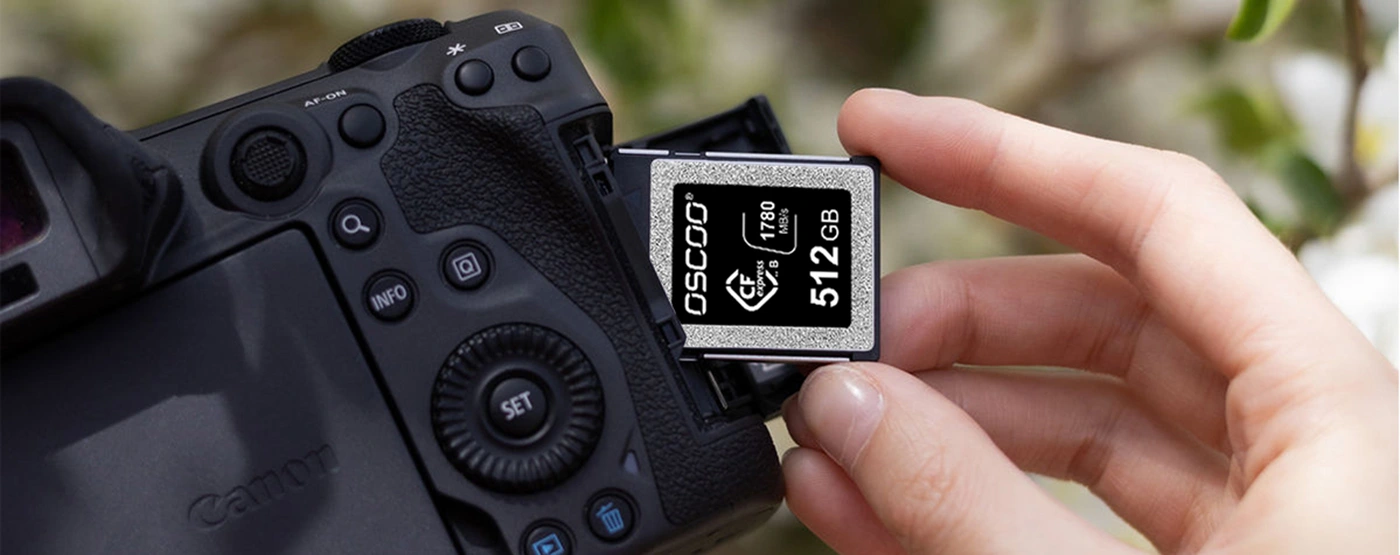
For photographers and videographers who demand peak performance, memory cards are no longer simple recording tools but critical hardware that defines the boundaries of your creativity. When your equipment needs to handle massive data flows from 8K RAW video or high-speed burst RAW photo capture, traditional SD cards or even XQD cards can become a bottleneck. CFexpress Type B, leveraging its advanced architecture based on PCIe and NVMe, delivers unmatched read/write speeds and reliability, establishing itself as the essential choice for professional content creation.

what is cfexpress type b card article header img CFexpress Type B Card - The Essential Guide

What Is CFexpress Type B Card

CFexpress Type B is a high-performance removable memory card format designed specifically for professional content creation, including photography and videography. It is part of the CFexpress standard, which was developed by the CompactFlash Association (CFA) to replace older, slower memory card formats and meet the growing demand for faster data transfer speeds.
First introduced in 2017 alongside the CFexpress 1.0 specification, Type B was the original form factor in the CFexpress family. Later, in 2019, the CFA released the 2.0 specification, adding Type A (smaller) and Type C (larger) form factors to cater to different device sizes and performance needs. One of the most important things to note about CFexpress Type B is that it is physically identical to XQD cards—meaning it has the same dimensions and contact layout—allowing it to work in many XQD-compatible devices with a simple firmware update.

Technical Specifications

Physical Characteristics

CFexpress Type B cards have a compact, durable design that fits most professional cameras and devices. They measure 38.5 × 29.8 × 3.8 millimeters—about the same size as a standard XQD card—and weigh approximately 10 grams. This small size makes them easy to carry and compatible with a wide range of devices without adding extra bulk.

Interface and Protocol

The speed of CFexpress Type B cards comes from two key technologies: the PCIe interface and the NVMe protocol. The PCIe interface (Peripheral Component Interconnect Express) is a high-speed connection used in computers and electronic devices, while the NVMe (Non-Volatile Memory Express) protocol optimizes data transfer for solid-state storage, reducing latency and improving efficiency. Most CFexpress Type B cards use PCIe 3.0 x2 lanes (for CFexpress 1.0 and 2.0) or PCIe 4.0 x2 lanes (for CFexpress 4.0), which directly impact their maximum speed.
oscoo 2b banner 1400x475 1 CFexpress Type B Card - The Essential Guide

Speed Performance

Speed is one of the biggest advantages of CFexpress Type B cards, especially for capturing high-resolution video and fast burst photography. The table below shows the maximum bandwidth and typical real-world speeds for each CFexpress standard version, so you can see exactly what to expect.
CFexpress StandardMaximum BandwidthTypical Read SpeedTypical Write Speed
1.02.0 GB/s1,700–1,850 MB/s1,500–1,700 MB/s
2.02.0 GB/s1,700–1,850 MB/s1,500–1,700 MB/s
4.04.0 GB/s3,000–3,750 MB/s2,500–3,500 MB/s
It’s important to note that sustained write speed (the speed at which the card can write data continuously) is more important than peak speed for video recording. Many professional cards also have VPG (Video Performance Guarantee) ratings, such as VPG400 or VPG800, which ensure a minimum sustained write speed (400 MB/s or 800 MB/s, respectively) to prevent recording interruptions.

Capacity Range

CFexpress Type B cards are available in a wide range of capacities, from 64GB to 4TB. For most enthusiasts and professionals, 2TB cards are the most common choice, as they offer enough storage for hours of 4K video or thousands of high-resolution RAW photos. Some brands even offer cards with up to 1TB capacity that support 8K/12K RAW video recording, while others offer up to 2TB for extended shooting sessions.

How It Compares to Other Memory Cards

With so many memory card formats available, it’s helpful to compare CFexpress Type B to other popular options to understand its advantages and limitations. Below are comparisons to the most common formats.

CFexpress Type B vs. XQD

XQD cards are the direct predecessor to CFexpress Type B, and the two are physically identical. However, there are key differences in performance and compatibility that make CFexpress Type B a better choice for modern devices.
Caratteristica CFexpress Type B XQD
Interfaccia PCIe 3.0/4.0 x2 PCIe 2.0 x2
Protocol NVMe (efficient, open standard) Proprietary (licensed)
Velocità massima 4.0 GB/s (CFexpress 4.0) 1.0 GB/s
Compatibilità Works in XQD slots (with firmware update) Does not work in CFexpress-only slots

CFexpress Type B vs. Type A & Type C

The CFexpress family includes three form factors: Type A, Type B, and Type C. Each is designed for different devices and performance needs, with Type B being the most widely adopted.
Caratteristica Type B Type A Type C
Dimensions (mm) 38.5 × 29.8 × 3.8 20.0 × 28.0 × 2.8 (smaller than SD) 54.0 × 74.0 × 4.8 (larger)
PCIe Lanes 2 1 4
Maximum Bandwidth 4.0 GB/s (CFexpress 4.0) 2.0 GB/s (CFexpress 4.0) 8.0 GB/s (CFexpress 4.0)
Market Adoption Most popular (Canon, Nikon, Panasonic, DJI) Sony-specific Not yet widely implemented
Primary Use Cases Professional cameras, cinema cameras, drones Compact mirrorless cameras, prosumer devices Industrial use, high-end cinema (future)

CFexpress Type B vs. SD Express

SD Express is the latest version of the popular SD card format, but it cannot match the performance of CFexpress Type B. CFexpress Type B cards are 3–4 times faster than SD Express cards (which max out at 1.0 GB/s with PCIe 3.0 x1), making them better suited for high-data-rate tasks like 8K video recording. They also have a more robust design and better heat dissipation, which is important for sustained high-performance use. The tradeoff is that CFexpress Type B cards are more expensive than SD Express cards, but they offer professional-grade reliability for demanding workflows.

Compatible Devices

Most high-end cameras and professional video equipment now support CFexpress Type B cards.
Some of the most popular compatible devices include:

  • Nikon Z6 II, Z7 II, Z8, Z9
  • Canon EOS R5, R5 C, R3, R1
  • Panasonic Lumix S1H, GH6, S5 IIX; RED V-RAPTOR, KOMODO-X
  • DJI Ronin 4D, Inspire 3
  • Atomos Ninja V+
  • Blackmagic Video Assist

Additionally, you will need a compatible CFexpress Type B reader—preferably one with USB 3.2 Gen 2×2 (20Gbps) or faster—to maximize data transfer speeds when offloading content to your computer.

Casi d'uso ideali

CFexpress Type B cards are perfect for tasks that require fast, continuous data transfer. The most common use cases include:

  • 8K video recording, which requires a minimum sustained write speed of 1,400 MB/s for RAW footage;
  • high-bitrate 4K/6K video, such as ProRes RAW or Blackmagic RAW at 120+ frames per second;
  • high-resolution burst photography, where 50+ MP cameras shoot 20+ fps continuous RAW;
  • professional cinema production, where reliability and speed are critical industrial applications like high-speed data acquisition or medical imaging.

What to Consider When Buying

If you’ve decided that a CFexpress Type B card is right for you, there are several key factors to consider to ensure you choose the best option for your needs and budget. These factors focus on performance, capacity, brand reliability, and compatibility.

Speed Requirements

The first thing to consider is your speed needs. For 8K video recording, look for cards with a minimum sustained write speed of 1,400 MB/s or higher, and prioritize those with VPG400 or VPG800 ratings to avoid recording dropouts. For high-speed burst photography, focus on cards with 1,500+ MB/s write speeds (such as OSCOO CFexpress Type B Card) to ensure you can capture every frame without lag. If you have a CFexpress 4.0-compatible device, invest in a PCIe 4.0 card to maximize performance—these cards can reach read speeds of up to 3,750 MB/s and write speeds of up to 3,500 MB/s.

Capacity Planning

Capacity depends on how much content you plan to capture in a single session. For 8K video, 1 minute of RAW footage uses approximately 10GB of storage, so a 512GB to 2TB card is recommended for most projects. For 4K high-bitrate video, a 256GB to 1TB card is sufficient for most enthusiasts. For burst photography, 128GB to 512GB is usually enough, depending on how often you offload your photos. Keep in mind that higher-capacity cards are more expensive, but they offer more flexibility for long shoots without needing to switch cards.

Brand Selection

When it comes to memory cards, brand reliability is crucial—you don’t want to lose valuable photos or video due to a faulty card. Trusted professional brands include OSCOO, SanDisk, Lexar, Sony, etc., These brands offer consistent performance, durable designs, and reliable customer support. 

Reader Compatibility

To get the most out of your CFexpress Type B card, you need a compatible reader. Look for readers that explicitly support CFexpress Type B (XQD readers will not work) and have a USB 3.2 Gen 2×2 (20Gbps) or Thunderbolt 3/4 interface for maximum transfer speeds. 

The Future of CFexpress Type B Card

CFexpress Type B cards are not going anywhere anytime soon—if anything, their popularity is only going to grow as more devices adopt the format. The future will bring several key improvements, including wider adoption in mid-range cameras, which will make the format more accessible to enthusiasts. Capacities will also continue to increase, with 4TB+ cards becoming mainstream by 2027, and some brands already working on 8TB models. Additionally, PCIe 4.0 adoption will become more widespread, with real-world speeds exceeding 3,000 MB/s for both read and write. As production scales and technology advances, prices will also become more affordable, making CFexpress Type B cards a viable option for more users beyond just professionals.
CFexpress Type B cards have established themselves as the professional standard for high-performance memory cards, offering the speed, reliability, and capacity needed for modern content creation. Whether you’re a professional photographer, videographer, or an enthusiast looking to upgrade your gear, understanding the key details of these cards will help you make an informed decision that fits your needs. By choosing the right CFexpress Type B card, you can ensure that your valuable content is captured smoothly and securely, without the frustration of slow speeds or recording interruptions.
Scorri in alto

Contattaci

Compilate il modulo sottostante e vi contatteremo al più presto.

Modulo di contatto Prodotto